
How the Best Shared Calendar App Keeps Everyone Connected
.jpeg)
Ask any senior living administrator what eats up the most unplanned time in a given week, and family communication almost always comes up. Not because staff don't care — they do — but because the systems communities rely on to keep families informed were never built for this purpose.
The result is a communication disconnect that's frustrating for everyone: families who feel anxious and out of the loop, staff who spend hours fielding the same questions, and directors who absorb the fallout when trust erodes. Understanding why this happens is the first step to fixing it.
The Real Reasons Communication Breaks Down
No Single Source of Truth
In most senior living communities, family communication happens through a patchwork of channels: phone calls, voicemails, personal cell phones, group texts, emails, and occasionally a note left at the nurse's station. When information lives in five different places, things get missed — and when things get missed, families notice.
The problem isn't that staff aren't communicating. It's that there's no centralized, consistent system ensuring every family receives the same quality of updates regardless of which staff member happened to be available.
Staff Are Using Personal Phones
It's one of the worst-kept secrets in senior living: staff resort to personal phones and group texts to communicate with families because it's fast, familiar, and nothing else is easier. The problem is that this creates real HIPAA liability, leaves no documentation trail, and blurs professional boundaries for care staff in ways that create stress and confusion on both sides.
One director from a senior living advisory board described it clearly: caregivers give out their personal cell numbers to families, leading to after-hours messages, unmonitored conversations, and situations where staff feel obligated to respond when they're off the clock. It's a harm-reduction problem as much as a compliance one.
Phone Tag Is a Full-Time Job
When families can't get information proactively, they call. And when they call, someone has to track down answers, call them back, and repeat the process again tomorrow. Senior living nursing stations routinely field dozens of calls a day from families asking the same questions: How did she sleep? Did he eat today? Who is taking care of her this shift?
These aren't unreasonable questions. But answering them reactively — one call at a time — is an enormous drain on staff time that compounds over the course of a week, a month, a year.
Shift Changes Create Information Gaps
Care is a 24-hour operation, but communication often isn't. When the morning shift ends and the evening team comes on, context gets lost. A family message that came in at 2pm may not reach the right person until the next morning — if it reaches anyone at all. Without a shared, organized communication record, important details fall through the cracks between shifts.
Families Who Feel Uninformed Become Adversarial
This is the pattern senior living operators know well: the families who feel most out of the loop are the ones most likely to escalate concerns, file complaints, or become adversarial when something goes wrong. Not because they're difficult — but because anxiety without information tends to turn into distrust.
Conversely, communities that communicate consistently and proactively build a level of family trust that pays dividends when difficult situations do arise. When families already feel informed and connected, they're far more likely to extend good faith.
What Families Actually Need
The good news is that families aren't asking for much. Based on extensive conversations with senior living directors and care operators, what families consistently want comes down to three things:
Daily visibility. Not a call — just a reliable, readable summary of how their loved one is doing. Eating, sleeping, activities, anything notable from the care team. Something they can check in 30 seconds that tells them their loved one is okay.
A direct line. When they have a question, a simple way to reach the care team without calling the front desk and waiting for a callback. Something that feels like texting — but is secure and appropriate.
Consistency. Not perfect communication — just consistent communication. The same quality of update whether it's Monday or Saturday, whether the director is in or out, whether the primary nurse is on shift or not.
None of this is complicated. What's been missing is a system that makes it sustainable.
How Technology Closes the Gap
The challenge with most proposed solutions is that they add work for already-stretched staff. Any tool that requires manual data entry on top of everything else quickly gets deprioritized or used inconsistently — which means families still don't get reliable updates.
The only sustainable approach is one that automates the routine communication piece by pulling from data that already exists. That's exactly what Caily does.
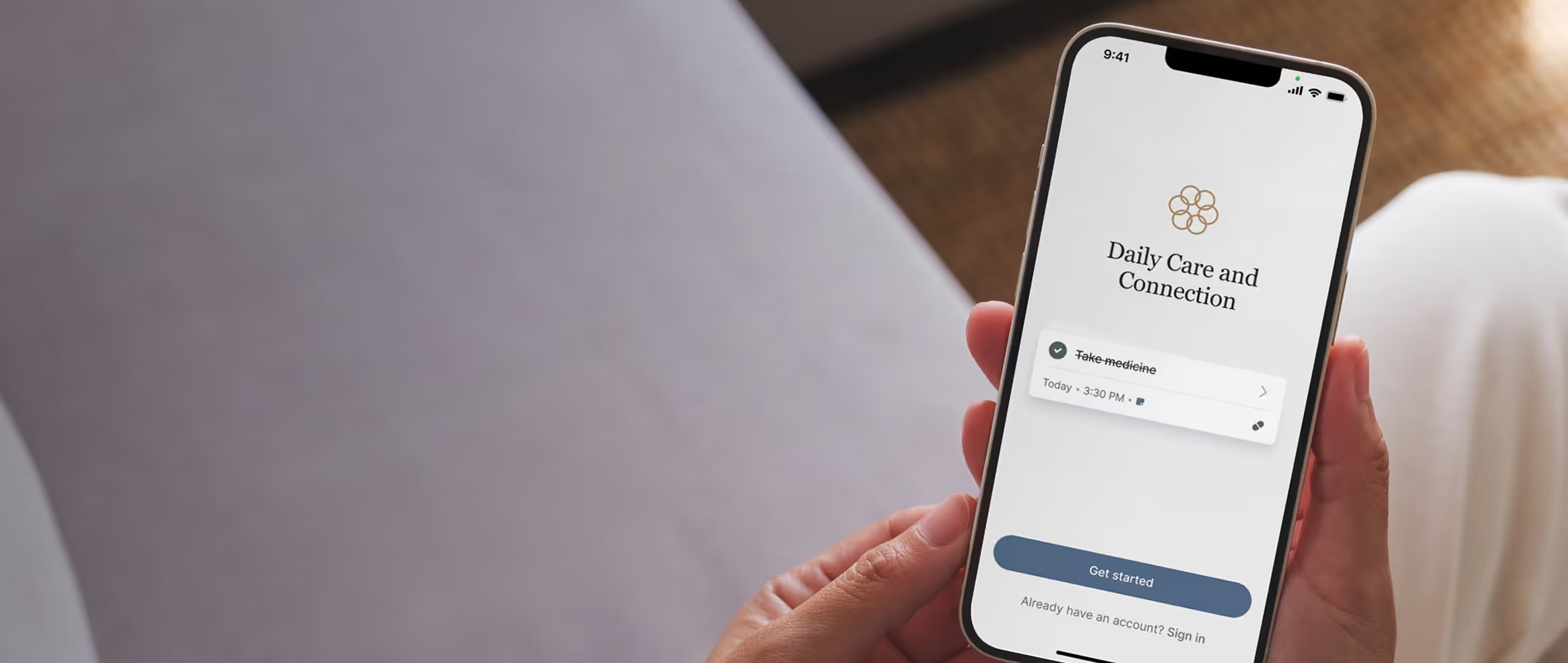
Caily integrates directly with a community's existing EHR system, automatically generating daily care summaries for families from ADL data, care notes, vitals, and medications that staff are already documenting. Families receive a notification each day when their update is ready, review it through a clean mobile dashboard, and can send a message directly to the care team if they have questions — all through a HIPAA-compliant, fully documented channel.
For staff, the result is fewer inbound calls and a shared dashboard where every family message is visible, organized by resident, and trackable across shifts. No message gets missed because someone was off duty. No conversation happens on a personal phone. Every communication is logged and available for review.
For communities, it means families who trust them — and a documented record of that trust.
What This Looks Like in Practice
Before Caily: A family member calls Tuesday morning to check in on their mom. The front desk takes a message. The charge nurse calls back at 3pm. The family member misses it. They call again Wednesday. The nurse who knew the answer is off shift. The director gets pulled in. The same question takes three days and four people to answer.
With Caily: The family member receives a daily update Tuesday morning. They see their mom ate well, participated in the afternoon activity, and slept through the night. They have a follow-up question about a medication change. They send a message through the app. The charge nurse sees it in the shared dashboard and responds before lunch. Done.
The interaction that took three days now takes twenty minutes — and the family member starts the week feeling connected rather than anxious.
Building a Communication System That Actually Works
For senior living communities evaluating their family communication, the questions worth asking are:
- Do families receive consistent daily updates regardless of which staff are on shift?
- Is there a documented, HIPAA-compliant channel for family-to-staff messaging?
- Can any staff member see the full history of a family's communications without hunting through texts and voicemails?
- If a family complaint arose tomorrow, would you have a clear record of what was communicated and when?
If the honest answer to any of these is no, the communication infrastructure has room to grow — and that gap is costing the community time, trust, and potentially legal exposure.
Caily is built to close that gap. One platform, one source of truth, and a family experience that actually reflects the quality of care your team delivers every day.
Learn more at Caily.com.
FAQs About Senior Living Family Communication
Why do families feel out of the loop in senior living communities?
Most senior living communities rely on reactive communication — families call when they have questions, and staff respond when they can. Without a proactive daily update system, families go hours or days without information, which creates anxiety and erodes trust over time.
What is the biggest communication challenge for senior living staff?
The volume of repetitive inbound calls from families asking routine questions — how their loved one ate, slept, or how their day went — takes significant staff time that would otherwise go toward direct care. Without a system that delivers those updates proactively, the cycle repeats every day.
How does Caily improve family communication in senior living?
Caily integrates with a community's existing EHR to automatically generate daily care summaries for families, delivered through a simple mobile dashboard. Families get the visibility they need without calling, and staff get a HIPAA-compliant shared messaging channel that replaces personal phones and untracked group texts.
Is HIPAA-compliant family communication really necessary?
Yes. Personal phones and group texts — the most common workarounds in senior living — create real compliance exposure, leave no documentation trail, and blur professional boundaries for staff. A HIPAA-compliant platform protects the community, the staff, and the families being served.

Get Started Now
Enjoy full access to everything Caily offers, from medication tracking to shared schedules and daily check-ins. See how much easier caregiving can be when everything is coordinated in one place.
Start your free trial