Apps for Elderly Care: How Technology Keeps Families Connected to Senior Living Communities

Apps for Elderly Care: How Technology Keeps Families Connected to Senior Living Communities
There are more than 61 million Americans over the age of 65, and while most older adults prefer to remain at home as long as possible, many will eventually transition into a senior living community — whether that's assisted living, memory care, or a continuing care retirement community. When that transition happens, one of the biggest challenges families face isn't the move itself. It's staying genuinely connected to what's going on after the move.
The good news is that technology for elderly care has advanced dramatically, and new platforms are making it easier than ever for families to feel informed, involved, and at peace — even from across the country.
The Communication Gap in Senior Living
When a loved one moves into a senior living community, families don't stop caring. If anything, the questions multiply. How did they sleep? Did they eat well today? Are they participating in activities? Who is caring for them on this shift?
But getting answers to those questions has traditionally meant calling the front desk, leaving voicemails, playing phone tag with nurses, or simply waiting and hoping for news. According to AARP's 2024 Home and Community Preferences Survey, 75% of adults 50 and older want to remain in their homes as they age — and their families want to stay connected just as much — and families want that connection just as much.
This is where the right technology makes a real difference. Senior care communication platforms are closing the gap between what's happening inside a community and what families actually know — in real time, securely, and without putting more burden on already stretched care staff.
Why Traditional Communication Methods Fall Short
Most senior living communities are doing their best with the tools they have, but those tools often create more problems than they solve:
- Phone tag: Staff are busy. Families call. Messages get missed. Callbacks happen hours later, or not at all.
- Group texts: Many staff resort to personal phones and group chats for quick updates — a practice that creates serious HIPAA liability.
- Clunky EHR portals: Most electronic health record systems have communication features that are notoriously difficult to use, resulting in only bare-minimum documentation and no meaningful family updates.
- No audit trail: When concerns or disputes arise, communities with informal communication systems have little to show for the care that was provided.
The result is a communication disconnect that breeds family anxiety, erodes trust, and adds hours of unnecessary administrative work for staff every single week.
How Senior Care Technology Is Changing Things
Modern care communication platforms are designed to solve this disconnect — not by adding more work for staff, but by automating and streamlining what already needs to happen.
Here's what the best platforms for elderly care actually do:
Automated Daily Care Updates. By integrating directly with a community's existing electronic health record (EHR) system, platforms can automatically generate a consolidated daily summary for families — covering activities of daily living (ADLs), vital signs, medications, and care notes. Families receive a notification when the update is ready and can review it on their phones or computers without calling anyone.
HIPAA-Compliant Secure Messaging Families can message care staff directly through a secure platform — no personal phone numbers, no group texts, no compliance risk. Staff see all incoming messages in a shared dashboard, organized by resident, and can respond quickly without disrupting their workflow.
Care History at a Glance. Rather than trying to piece together how a loved one has been doing over the past few weeks, families can access a searchable history of past updates, trends in health metrics, and caregiver notes — giving them real context, not just snapshots.
Reduced Staff Burden. When families have access to daily updates and can message staff directly, the volume of repetitive phone calls drops significantly. That means care teams spend less time on the phone and more time providing care.
What to Look for in a Senior Care Platform
Not all tools are created equal. When evaluating technology for a senior living community or for staying connected as a family member, the most important factors are:
- HIPAA compliance: Any platform handling resident information must meet federal privacy standards. This is non-negotiable.
- EHR integration: Manual data entry is a non-starter for busy care teams. The best platforms pull information directly from existing systems.
- Ease of use for both staff and families: If the tool is too complex, staff won't use it consistently. Look for simple, intuitive interfaces that require minimal training.
- Secure messaging: Direct communication between families and care staff should be built in, not bolted on.
- Administrative visibility: Leadership needs to see all communications in one place for compliance, quality improvement, and accountability.
How Caily Bridges the Gap
Caily is a HIPAA-compliant care communication platform built specifically for senior living communities and the families they serve. By integrating with a community's existing EHR, Caily automatically delivers daily care summaries to families — covering what their loved one ate, how they slept, their activity participation, and any care notes worth sharing.
Families receive a simple notification when their daily update is ready. They can review it in seconds, dig into health history and trends over time, and send a message directly to the care team if they have questions. No phone tag. No anxiety spirals. Just clear, consistent communication.
For care communities, Caily replaces the patchwork of group texts, missed calls, and clunky EHR portals with a single secure platform — one that staff can actually use, that families actually appreciate, and that administration can rely on for documentation and compliance.
The Bottom Line
When a loved one moves into a senior living community, families deserve to stay connected. And care communities deserve a tool that makes that connection easy, efficient, and safe. Technology has finally caught up to that need — and platforms like Caily are making it a reality for communities and families across the country.
Learn more at Caily.com.
FAQs About Senior Care Communication Technology
How do senior care communication apps help families? They eliminate the need for constant phone calls by delivering automated daily updates directly to families. Families can review care summaries, track trends over time, and message staff — all from their phone or computer.
What makes Caily different from other senior care platforms? Caily integrates directly with a community's existing EHR system to automate daily family updates — reducing manual work for staff while giving families clear, consistent information. It combines secure messaging, care history, and an administrative dashboard into one HIPAA-compliant platform.
Is Caily easy for families to use? Yes. Families receive a simple notification when their update is ready, log in with single sign-on, and can view everything in one clean dashboard. No complicated setup, no multiple logins.
Is Caily HIPAA compliant? Yes. Caily is built to meet HIPAA standards, with secure messaging, role-based permissions, and full communication tracking for compliance and audit purposes.
How does Caily work for senior living communities? Communities integrate Caily with their existing EHR. From there, daily update templates are customized for each resident, families are onboarded, and all family communications are managed through a shared staff dashboard. Implementation typically takes a few weeks, not months.

Get Started Now
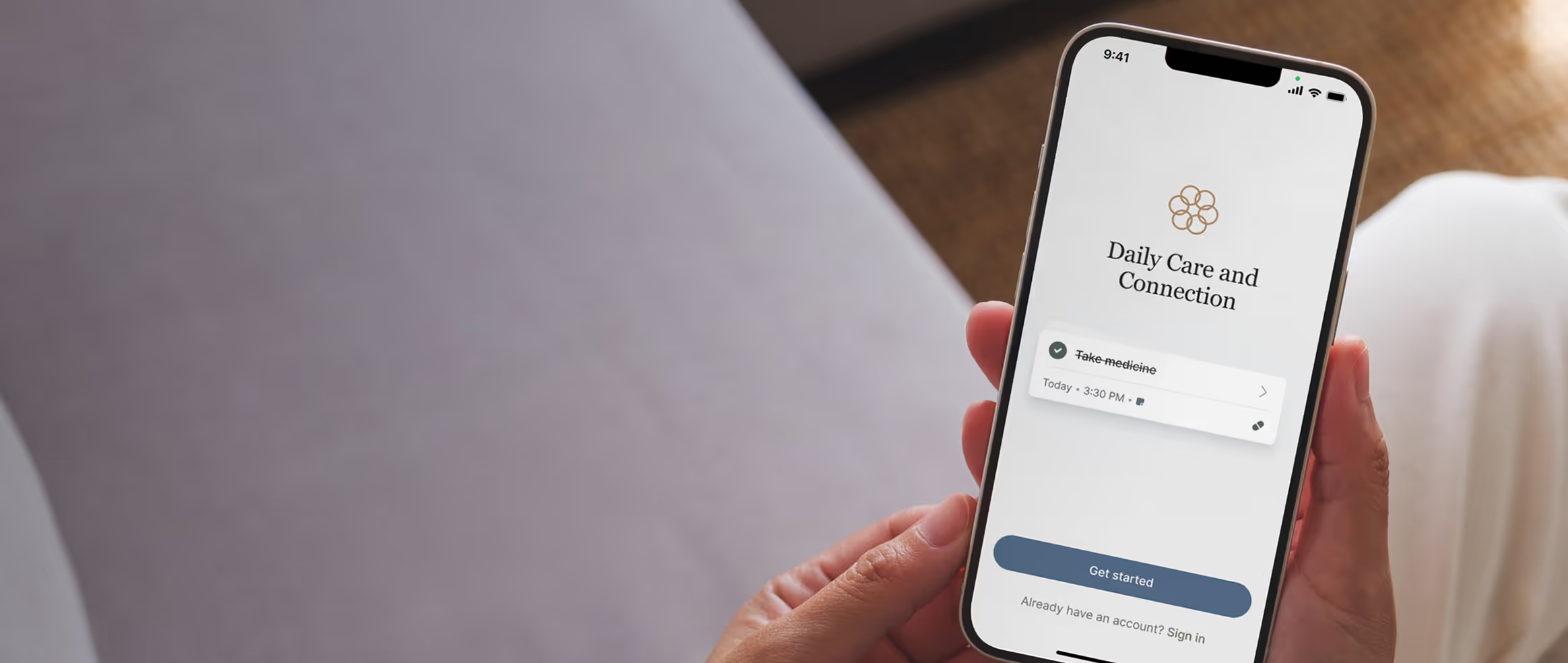
Enjoy full access to everything Caily offers, from medication tracking to shared schedules and daily check-ins. See how much easier caregiving can be when everything is coordinated in one place.
Start your free trial