
What Engaged Families Really Want From Your Senior Living Community

There is a certain kind of phone call that senior living operators know well — the one that comes in on a Tuesday afternoon from a daughter in another state who just wants to know if her mother ate lunch. On the surface, it looks like a small ask. But underneath it is something much more significant: a family that is paying close attention and not getting the information they need. Family communication in senior living communities has become one of the most important — and most underserved — aspects of delivering excellent care. And the communities that understand this are beginning to pull ahead.
It has become fashionable in some circles to describe highly engaged families as "demanding." That framing does everyone a disservice. The families who call the most, ask the most, and follow up the most are not problems to be managed — they are people who care deeply about someone they love and are doing everything they can to stay connected across a distance. They are also your most powerful advocates, if you give them something worth talking about. What they are actually doing, whether they realize it or not, is telling you exactly where your communication strategy has gaps.
The expectation bar has shifted. Unanswered phone calls and voicemails returned days later have become genuinely unacceptable to the adult children who manage most care decisions. These are people who track packages in real time, get flight delay alerts before the airline calls, and receive same-day updates from their kids' schools. They are not going to settle for silence when it comes to their parent's daily experience. The good news is that what they actually want is far simpler than most operators assume.
They Want to Know If Their Person Ate Today
Food is never just food when it comes to an aging parent. For families of seniors, appetite is one of the clearest emotional signals they have. When a parent isn't eating well, it doesn't register as a clinical notation — it registers as something being wrong. And because most families cannot be physically present at every meal, they are entirely dependent on care staff to tell them what they would otherwise observe themselves.
In advisory conversations with operators across the country, meal and appetite data consistently ranks among the top daily data points families ask about. This is especially true for families of residents with dementia, who often cannot accurately self-report their own experience. Those families know that staff are the eyes and ears for nearly every moment of their loved one's day. They are not asking for a dietary analysis or a caloric breakdown. They want a simple, human note — their person ate well today, or had a lighter lunch than usual, or seemed a little off at dinner. That level of resident daily updates in senior care is not a luxury. For many families, it is the difference between a peaceful evening and a sleepless one.
The communities that treat meal updates as routine communication — not an exception — are the ones that dramatically reduce inbound calls around this exact topic. Senior living family updates about eating don't need to be formal. They just need to happen.
Sleep Is the Silent Indicator They're Watching
Sleep disruption is frequently one of the earliest signs of a behavioral or health change in older adults, particularly those living with cognitive impairment. Families sense this even if they cannot articulate why — they notice that their loved one seems foggy on the phone, or more irritable than usual, and their first instinct is often to wonder whether something changed with sleep.
What makes this more complicated is that most families bypass front-line staff entirely when they have this concern and go straight to a director or nurse. This creates unnecessary pressure on leadership and takes time away from care. And it happens because there is no regular channel for rest-related updates — so families are left filling in the gaps themselves. Advisory participants have noted how difficult it can be to reference past ADL documentation in current EHR systems, making it hard to spot patterns over time and nearly impossible to have an informed conversation with a concerned family on the fly.
What families are asking for here is not a clinical sleep report. They want the kind of update a neighbor might share — that their loved one had a restless night, or slept soundly, or seemed tired at breakfast. That information, shared through a consistent family portal or messaging system in senior living, does more to reduce anxiety than almost anything else. And in the long run, it builds the kind of trust that makes the harder conversations — the ones about health changes and care transitions — significantly easier to have.
Outings Matter More Than You Think
For a family member who lives two states away and visits once a month, knowing that their person got outside, attended an activity, or shared a laugh with another resident is not a nice-to-have. It is a proxy for presence. It is how they picture their loved one's day. It is, frankly, one of the reasons they chose a community over in-home care.
Engaged families in assisted living are watching for social engagement data because it signals quality of life, not just safety. And what operators often underestimate is that it is not the routine events that matter most — it is the exceptions. If a resident who usually attends the Thursday garden walk stayed in her room instead, that is the update that needs to reach the family. It signals something worth following up on. Proactive communication around those moments can head off a wave of concern before it becomes a wave of calls.
Research consistently confirms that regular family contact helps reduce depression and anxiety in seniors, and that families who stay informed about social engagement feel more genuinely involved in their loved one's life. Resident daily updates in senior care do not need to cover every single hour of the day — but a quick note that says "she went to the garden today and loved it" does more for family satisfaction than a polished monthly newsletter ever could.
The Stories Are What They Share With Each Other
Data satisfies the logical brain. Anecdotes satisfy the heart. This distinction matters enormously in family communication in senior living communities, because families are not just processing information — they are maintaining a relationship with someone they love and cannot always see.
In advisory sessions with operators, one pattern emerged more clearly than almost any other: the families who feel most at ease are the ones who have a personal relationship with at least one staff member. Someone who calls to share a funny thing that happened at lunch before there is ever an incident to report. Someone who mentions that dad has been especially talkative this week. These small moments of casual communication build a foundation of comfort and trust that completely changes how families receive difficult news when it eventually comes.
Staff often hesitate to initiate this kind of communication because they worry about saying the wrong thing or overstepping. But families are not looking for clinical precision in these moments. They are looking for a human being on the other end of the phone who actually knows their person. One insight that came up repeatedly in operator conversations: families sometimes learn things from their loved ones that they do not share back with staff. The communication genuinely needs to go both ways. A ten-second text that says "your dad cracked a joke at lunch today" is not just sweet — it opens a door.
What Gets in the Way, and What Actually Fixes It
The communication breakdown in most senior living communities is not a caring problem. Staff care deeply. It is a systems problem. When sharing an update requires logging into a clunky EHR portal, navigating a form, or making a phone call that might go to voicemail, it starts to feel like extra work on top of an already full day. So it doesn't happen. And when it doesn't happen, families don't assume everything is fine — they fill the void with worry and reach out on their own.
Research supports what operators already know: family silence breeds family anxiety. The most effective approach to senior living family updates is proactive, structured, and delivered through a channel families actually use — typically a text or a dedicated app, not a web portal they have to log into and remember the password for. Brief personal notes that go beyond the clinical record are not a burden when the right tool makes them feel like a natural part of the workflow.
Setting clear expectations at move-in also matters more than most communities realize. Families who know upfront how often they will hear from the community, what kind of updates to expect, and who to contact with specific questions are significantly more satisfied — even when the news is not always good. Clarity is its own form of reassurance.
The Communities That Get This Become the Ones Families Recommend
Engaged families are not a liability. They are a signal that your community matters deeply to the people who trust you with someone irreplaceable. What they want is not complicated or expensive. They want to know if their person ate. They want to know if their person slept. They want to know if their person got outside and had a moment worth remembering. And every so often, they want someone to call just to say something human.
The communities that answer those questions consistently — and answer them in a way that feels personal rather than procedural — become the communities that families recommend to every friend going through the same search. Family communication in senior living communities is not a back-office function. It is a differentiator. And the tools exist to make it genuinely manageable for the care teams doing the work every day. See how Caily helps care teams share the moments that matter, without adding to their workload.
Frequently Asked Questions About What Engaged Families Really Want From Your Senior Living Community
What do families of senior living residents ask about most often?
Meal and appetite data consistently tops the list, followed by sleep patterns and social engagement — families want to know whether their loved one is eating, resting, and participating in daily life, because those three things paint a reliable picture of how their person is actually doing.
How can senior living communities reduce inbound calls from families?
Proactive, structured daily updates sent through a channel families already use — like text or a simple app — eliminate most of the uncertainty that drives families to pick up the phone in the first place. When families know what to expect and receive regular resident daily updates in senior care, call volume drops significantly.
Why does personal communication matter more than data in senior living family updates?
Clinical data tells families what happened; personal anecdotes tell them who their loved one is today. A brief, warm note from a staff member who genuinely knows the resident builds the kind of trust that no portal or report can replicate, and it makes everything — including difficult conversations — easier when it counts.

Get Started Now
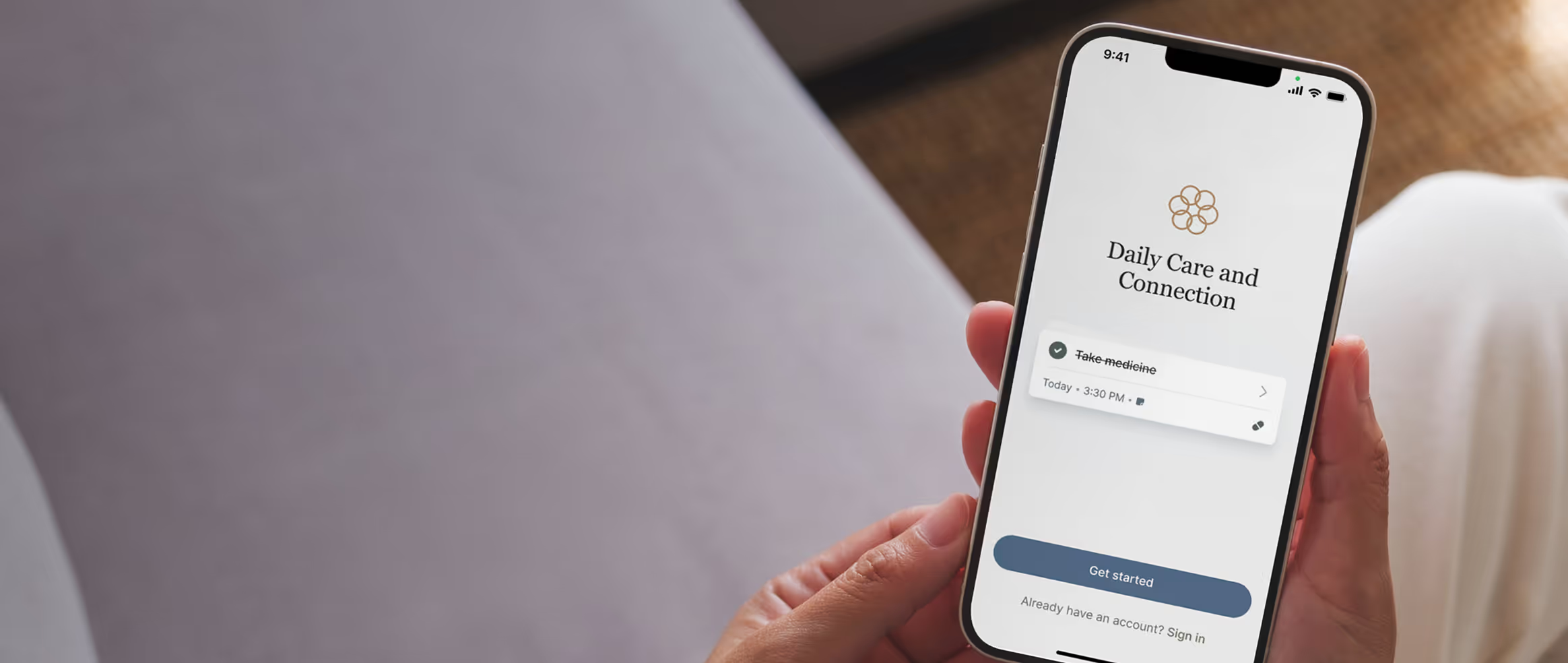
Enjoy full access to everything Caily offers, from medication tracking to shared schedules and daily check-ins. See how much easier caregiving can be when everything is coordinated in one place.
Start your free trial