
Stop Saying "Facility": The Language Shift Transforming Senior Living Culture
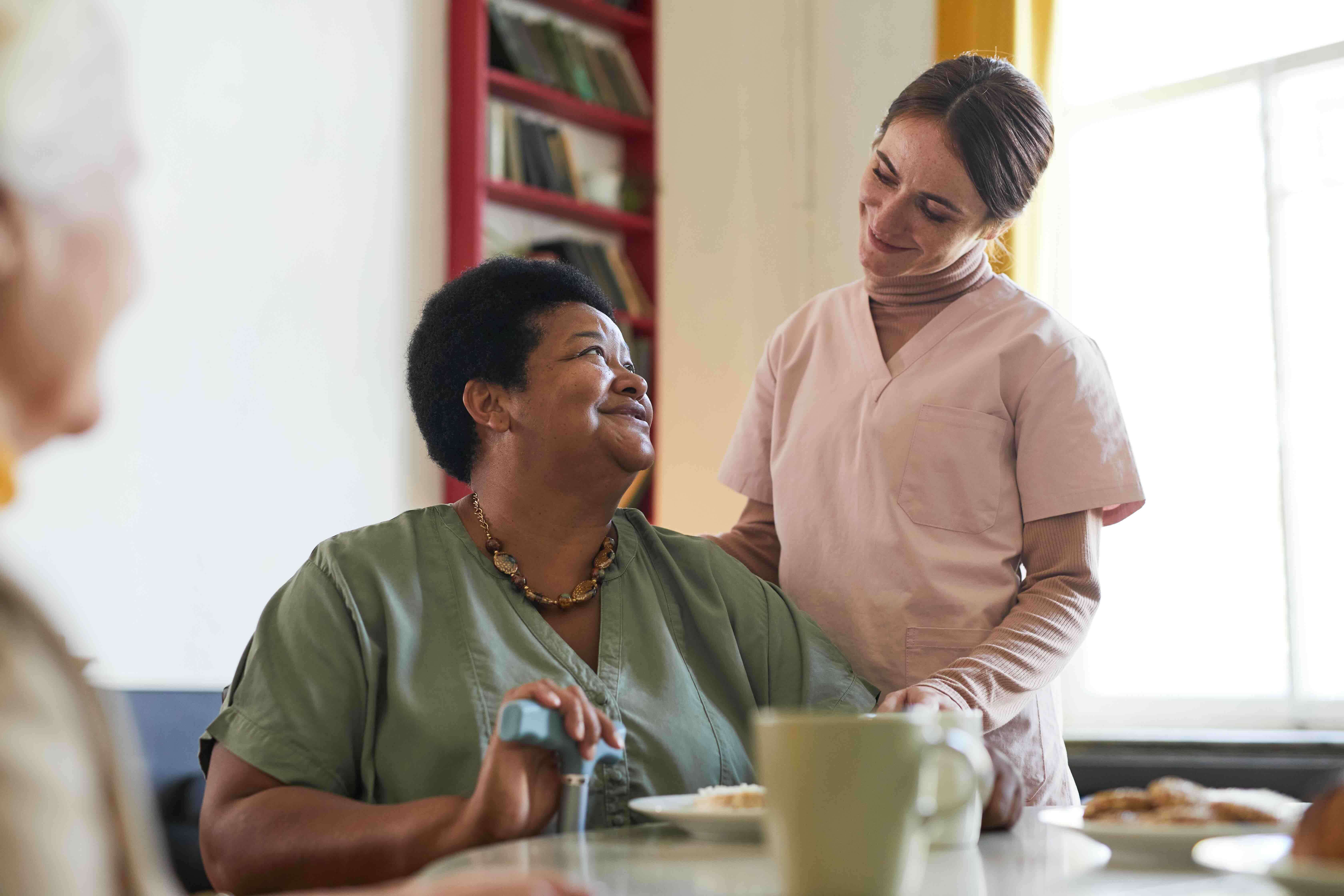
Picture a family doing their research on senior living communities for the first time. They've spent evenings on Google, requested brochures, and finally booked a tour. Before they ever set foot through the door, they've already heard the word "facility" more times than they can count — on the website, in the intake call, in the printed materials sitting on their kitchen table. And whether anyone on your team has ever stopped to think about it or not, that word is already doing something to them. It's already shaping what they expect to find.
That's the thing about language in senior care. It isn't just semantics, and it isn't just branding. The words a senior living community uses every day — in emails, in hallway conversations, on signage, in care notes — shape how residents feel about where they live, how families interpret the level of care being provided, and how staff understand their own roles. There's a phrase that has become something of a touchstone in person-centered care philosophy: words make worlds. It comes from the Eden Alternative framework, and it's as true in the day-to-day of senior care as anywhere else. The language you use isn't describing your culture. It's building it.
What One Word Is Quietly Undermining Your Culture
"Facility" is not a neutral word. It carries a specific kind of weight — the weight of places you pass through, not places you belong to. Hospitals are facilities. Detention centers are facilities. Storage units are facilities. They are transactional environments, built for function, not for living. When a senior living community reaches for that word, it borrows all of that institutional baggage, whether it intends to or not.
For a resident who may call your community home for months or even years, that word signals something cold from the very beginning. It signals that this is a place organized around systems and protocols, not around people. Families feel it too, even if they can't articulate why. They arrive on tour with a low-grade tension that has nothing to do with your staff's warmth or your building's amenities — and everything to do with the language that preceded the visit.
The problem isn't confined to a single word on a homepage. "Facility" tends to travel in a pack. It shows up in intake paperwork, in care update emails, in conversations between staff members who have simply inherited the vocabulary of the industry without ever questioning it. When the language is institutional at every touchpoint, the experience feels institutional — even when the care itself is genuinely warm and attentive. Language consistency matters because it creates the emotional backdrop against which everything else is received. A care team that goes above and beyond can still feel distant if their communications read like a hospital chart.
This isn't a new problem. Long-term care culture has been shaped by decades of clinical, compliance-driven language that made sense in regulatory contexts and got adopted everywhere else by default. What's different now is that the industry is finally naming it — and doing something about it.
The Communities Rewriting the Script
The movement toward person-centered language in senior care is not a trend. It's a philosophical shift with deep roots, most prominently in frameworks like the Eden Alternative, which has argued for years that the way we speak about elders is a direct reflection of how we value them. "Words make worlds" isn't just a memorable phrase — it's a call to examine every word in daily use and ask: what does this communicate about who we think our residents are?
Forward-thinking senior living communities are making that examination, and it's showing up in specific, intentional language swaps.
"Facility" to "community" is the most foundational shift. Community implies belonging. It implies that the people who live there are connected to something, not simply contained within it. It's a word that signals home, not institution — and that signal matters to families long before they ever see your dining room or meet your care team.
"Patient" to "resident" or "guest" is equally important, and arguably even more personal. "Patient" frames a person through the lens of medical need. It positions them as someone receiving care, rather than someone living life. Residents and guests both restore agency and personhood to the people who live in your community.
"Health updates" to "care updates" is a subtler shift but a meaningful one. Health updates sound clinical — like a chart entry or a physician's note. Care updates are broader and more human. They communicate that what's being shared is about the whole person, not just their diagnoses.
"Transparent" to "clear" is one community often overlooked. "Transparent" has become corporate filler at this point — it sounds good but doesn't actually mean anything specific in a care context. Clear does. Clear communication, clear expectations, clear updates. Plain language builds trust faster than buzzwords, every time.
"Staff" in formal communications → "care partners" or "team members" changes the relational dynamic in ways that matter to both families and the people doing the work. Care partners position caregivers as collaborators in a resident's life, not interchangeable units of labor. It shifts the internal story as much as the external one.
For each of these swaps, the why matters as much as the what. This isn't about finding softer-sounding substitutes. It's about choosing words that accurately reflect how your community sees the people who live and work there — and then letting that reflection guide everything from your email templates to the way staff answer the phone.
Language Doesn't Just Reflect Culture — It Shapes What Families Hear
There's a gap that opens up when the language a senior living community uses internally doesn't match what families hear and expect. It's not always a dramatic disconnect. More often it shows up in small moments: a care note that reads like a discharge summary, a mass message that refers to "the facility's protocols," a phone call where a team member uses "patient" to a family who has only ever heard "resident." None of these moments is catastrophic on its own. But they compound. And in a relationship that is already emotionally loaded — where families are already asking themselves whether they made the right decision — small frictions add up to real doubt.
Families evaluating senior care communication are not just listening to what communities say. They're listening to how communities say it. They're picking up on whether the language reflects dignity or efficiency. Whether the person giving them an update seems to be talking about a resident or a case number. Whether the words feel like they were written for a person or copied from a template.
This is where senior care communication becomes not just a culture question but a trust question. Families are not only asking "is my parent safe?" They're asking something harder: does this place see my parent as a person? The answer to that question is communicated through language before it's communicated through anything else. Before the tour, before the care plan, before any of the difficult conversations that come with long-term care — the words arrive first.
Communities that close the gap between their internal culture and their family-facing communication build something that is genuinely difficult to replicate: the feeling that the people caring for your loved one actually care. That feeling is built word by word, message by message, over the entire length of a family's relationship with your community.
A Simple Language Audit Any Community Can Do
The language shift doesn't require a rebrand or a consultant. It requires attention and intention — and a practical starting point. Here's a lightweight audit any community can run without disrupting operations.
Start with your last 10 family communications. Pull the most recent emails, app messages, or newsletters you've sent to families and read through them with fresh eyes. Highlight every word that feels institutional, clinical, or impersonal. Look specifically for "facility," "patient," "health update," "transparent," and any phrasing that sounds more like a compliance document than a conversation.
Review your website and intake materials. These are often the first place families encounter your language, and they're also the last to get updated. Run a simple keyword search on your own site for "facility" and see how many times it appears. Do the same with your intake paperwork. You may be surprised.
Ask a long-tenured team member. This is one of the most underused steps. Someone who has worked in your community for years has heard the language that feels off — the phrases that don't match the care being given. Ask them. Their answer will tell you more about your culture than any audit tool.
Build a one-page preferred language reference. Once you've identified what needs to shift, create a simple document with preferred terms and post it where staff will see it. Not as a corporate mandate, but as a shared vocabulary — a resource that gives your team the words to match the culture they're already working to build. Update it as you go, and treat it as a living document rather than a one-time exercise.
This is not about policing language or making staff feel like they're being corrected. It's about giving people a common framework that reflects the values your community already holds. Most care teams aren't using institutional language because they believe it — they're using it because no one has ever offered them something better.
Words Are the First Form of Care
Families evaluating a senior living community are not running down a checklist. They are making one of the most emotionally difficult decisions of their lives, and they are reading every signal they can find. The amenities matter. The staffing ratios matter. The reputation matters. But language is the first signal they receive — before the tour, before the care plan, before any of the hard conversations that define long-term care relationships.
When the words a community uses reflect dignity, belonging, and personhood, families feel it. When they don't, families feel that too — even if they couldn't tell you exactly why.
The language shift happening across senior living culture is not about political correctness or marketing polish. It's about alignment: making sure the words used every day, in every message and hallway conversation, actually reflect the care being given. Culture doesn't change with a memo. It changes when the daily vocabulary starts to mean something different — when "community" becomes the word everyone reaches for naturally, not the word on the signage. When a care partner introduces themselves to a new resident's family, the word "patient" doesn't even cross their mind.
That shift is ongoing, and it's never finished. But it starts with paying attention to the words already in use — and being willing to replace the ones that aren't doing your culture justice. Think about the last communication your community sent to a family. Not what it said, but how it felt. Did it sound like it came from a place that sees their loved one as a person? If you're not sure, that's exactly where to start.
Frequently Asked Questions About the Senior Living Language Shift
Why does the word "facility" matter so much in senior living?
"Facility" carries the weight of institutional, transactional environments — places you pass through, not places you call home. For a resident who may live in your community for years, that word sends the wrong signal from day one.
How do we get staff to actually change the way they talk?
A simple one-page preferred language guide — posted in common areas and included in onboarding — gives your team a shared vocabulary without making anyone feel policed. Most caregivers didn't choose institutional language intentionally; they inherited it, and offering something better is usually enough.
Where do we start if we want to audit our community's language?
Pull your last ten family communications and highlight every word that feels clinical or impersonal, then run a quick search on your own website for "facility" and "patient." From there, building a preferred terms reference gives your team a clear, consistent starting point.
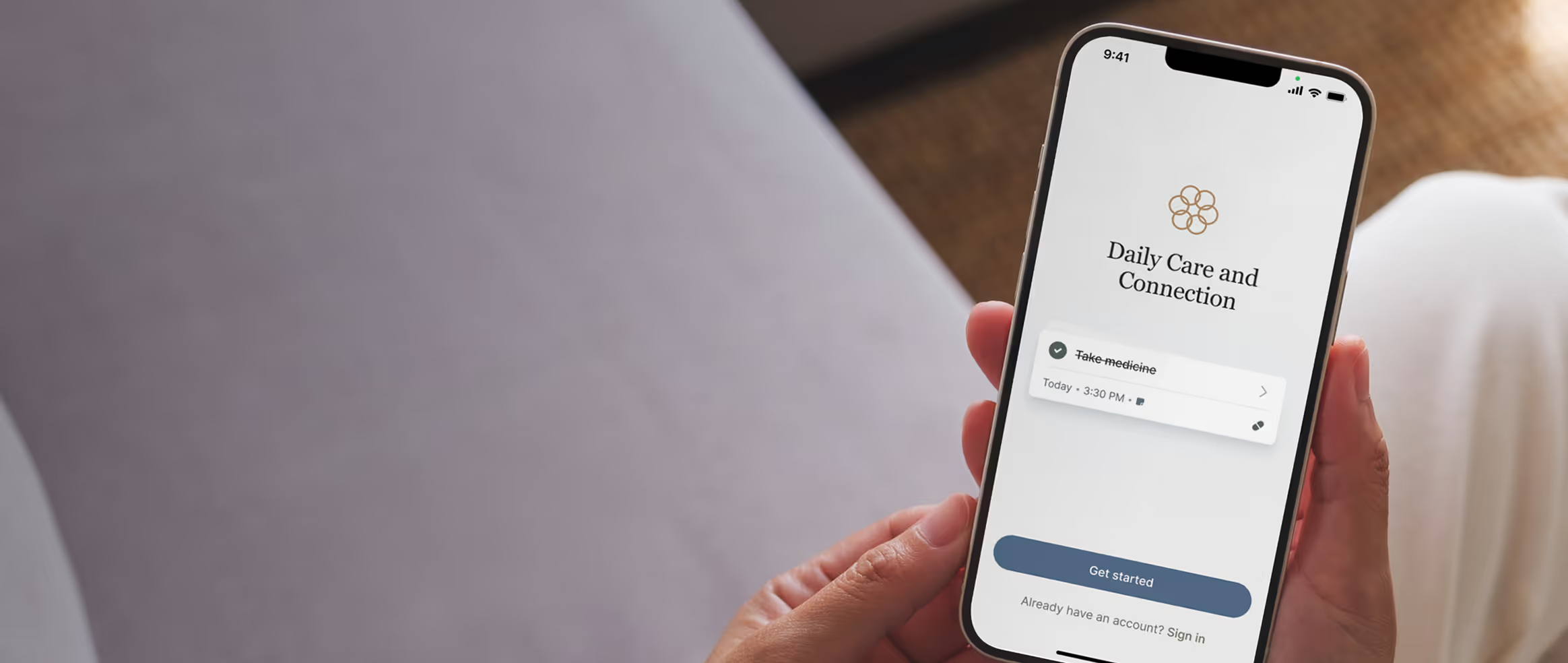

Get Started Now
Enjoy full access to everything Caily offers, from medication tracking to shared schedules and daily check-ins. See how much easier caregiving can be when everything is coordinated in one place.
Start your free trial