
How Inconsistent Family Updates Erode Trust in Senior Living Communities

When a family member places a loved one in a senior living community, they're not just signing a care agreement. They're extending an enormous amount of trust, trust that their loved one is eating well, sleeping safely, staying engaged, and receiving the attention they deserve. What they're really asking, even when they don't say it out loud, is: Will you keep us in the loop?
When family communication in senior living breaks down, that trust doesn't bend. It breaks.
The frustrating part is that most communities delivering genuinely good care are still losing that trust, not because of anything that happens in a resident's room, but because of the silence between updates. Families fill that silence with worry. And worry, left long enough, turns into something much harder to manage.
The Communication Gap Is Costing Senior Living Communities More Than They Realize
Senior living staff work incredibly hard. Caregiving will always and appropriately take priority over phone calls, but that dynamic creates a real problem when no communication infrastructure exists to fill the gap. When families don't hear anything, they don't assume everything is fine. They assume something is wrong and nobody is telling them. So they call. Then they call again. Then they ask a different staff member. Then they spend the weekend worrying.
Silence Creates an Information Vacuum
This cycle is exhausting for everyone involved, and it compounds quickly. Staff spend valuable time answering the same questions on repeat, questions that pull them away from the very residents families are calling about. The community that is doing genuinely good care work ends up looking disorganized and uncommunicative because no one ever built the systems to share what's actually happening.
The gap isn't usually a failure of care quality. It's a failure of communication infrastructure. And unlike care quality problems, communication infrastructure is entirely fixable.
Reactive Communication Is Never Enough
When updates only happen after a family calls to ask, communities are always playing catch-up. Every interaction is a fire drill rather than a checkpoint. Families begin to feel that information has to be extracted rather than shared, which signals, even unintentionally, that the community isn't being forthcoming. That perception is one of the fastest ways to erode the family trust in senior care that communities work so hard to build.
Proactive senior living family updates change the entire dynamic. Instead of families chasing information, they receive it, predictably, reliably, and without having to ask.
Why Long-Distance Families Are Especially Vulnerable
For families who live across the country from their loved one, the community's updates aren't supplementary. They're everything. Long-distance caregiver communication relies entirely on what the community chooses to share, because these family members can't stop by for a visit, read the room, or catch a caregiver in the hall for a quick check-in.
The Less Informed They Are, the Higher the Stakes
When senior living family updates are sporadic or nonexistent, long-distance family members have no way to calibrate. A week without news doesn't feel like a quiet week, it feels like a week of wondering, worrying, and imagining the worst. For someone already living with the weight of having a loved one far away, that compounding anxiety can reach a breaking point quickly.
Long-distance family members who feel out of the loop are often the most likely to escalate grievances. And in serious situations, they're more likely to pursue formal action, not necessarily because the care was poor, but because they never felt like they knew what was happening. The relationship between information access and family trust in senior care isn't just emotional. It has real, measurable operational and legal stakes.
They Chose Your Community Based on a Promise
When an out-of-state family selects a senior living community, part of what they're buying is peace of mind. They need to believe that even from a distance, they'll stay connected to their loved one's daily life. If that connection is never reliably established, the community has effectively failed to deliver on one of the most important parts of its value proposition — regardless of how good the care actually is. Long-distance caregiver communication done well is one of the most powerful relationship tools a community has. Done poorly, it's a liability.
Undocumented Communication Is a Liability
Here's something that doesn't get talked about enough in senior living: if a conversation with a family member wasn't documented, it effectively didn't happen. Verbal check-ins and informal phone calls offer no protection when a family later claims they were never informed about a change in their loved one's condition or care plan.
Informal Channels Create Compliance Risk
Many communities rely on ad hoc communication, staff texting from personal phones, verbal updates passed second-hand, or group chats that aren't archived and offer no audit trail. These approaches don't just create communication gaps. They create compliance risk that can be devastating if a grievance or legal challenge arises. When that day comes, the question will always be: what did you communicate, and when?
HIPAA-compliant family messaging isn't optional — it's the foundation of a defensible communication record. Every message, update, and care note shared through a secure, documented channel is evidence that a community is operating with transparency and accountability. Every informal text is a gap in that record.
Documentation Protects Everyone
Consistent, documented senior living family updates aren't just good for relationships. They're one of the most practical tools a community has for managing liability. Communities that build robust communication records are far better positioned when disputes arise — not because they're preparing for conflict, but because consistent documentation signals that nothing is being hidden. That transparency is itself a form of trust.
What Consistent Family Updates in Senior Living Actually Look Like
Consistent family communication doesn't mean flooding families with information or requiring staff to write lengthy daily narratives. It means giving families a reliable, structured window into their loved one's day, automatically, predictably, and in a format that works for people of all ages and tech comfort levels.
The Basics Families Always Want to Know
The most effective care updates for families cover what matters most: how their loved one ate, how they slept, what activities they participated in, and any relevant care notes. When this information is consolidated and delivered proactively — not after a family calls to ask — it fundamentally changes the relationship dynamic between the community and the family.
Families who know an update is coming don't spend their day worrying. They check in at their convenience, see what they need, and go about their day with peace of mind. That peace of mind is exactly what they were hoping for when they chose your community, and delivering it consistently turns an expectation into a reality.
Format and Accessibility Matter
Senior living family engagement is only effective if families can actually access and understand the information being shared. That means updates need to be simple, clearly formatted, and accessible on any device. It also means HIPAA-compliant family messaging needs to be easy enough for staff to use consistently — because an update system that requires significant manual effort will eventually get deprioritized when the unit gets busy. The best systems are the ones that make doing the right thing the path of least resistance.
The Ripple Effect of Getting Family Communication Right
When families receive consistent senior living family updates, something predictable and measurable happens: they call less. Not because they care less — because they no longer need to. Their questions are answered before they have a chance to form. The loop is closed before anxiety has time to set in.
Staff Get Time Back
One of the most immediate and tangible benefits of a strong family communication platform is the reduction in inbound calls and repetitive inquiries. Staff reclaim hours previously lost to phone tag, tracking down answers to questions families already should have had, and managing the emotional load of anxious family members calling at shift change. Caregivers stay focused on residents. Coordinators stay focused on operations. Senior living communities that reduce family calls don't do it by discouraging contact. They do it by making contact unnecessary. That's a meaningful distinction.
Trust Becomes a Competitive Advantage
Families who feel consistently informed are more forgiving of occasional challenges because they have an established foundation of trust. They feel like partners in their loved one's care rather than outsiders trying to extract information from an institution. That partnership makes them more likely to refer other families, less likely to file grievances, and more likely to renew and extend care agreements rather than explore alternatives.
Strong family communication in senior living isn't just good for satisfaction scores — though it does improve those significantly. It's a genuine competitive differentiator for occupancy, reputation, and long-term retention. The communities that get this right don't just avoid problems. They build the kind of trust that becomes part of their brand.
How Caily Helps Senior Living Communities Stay Connected With Families
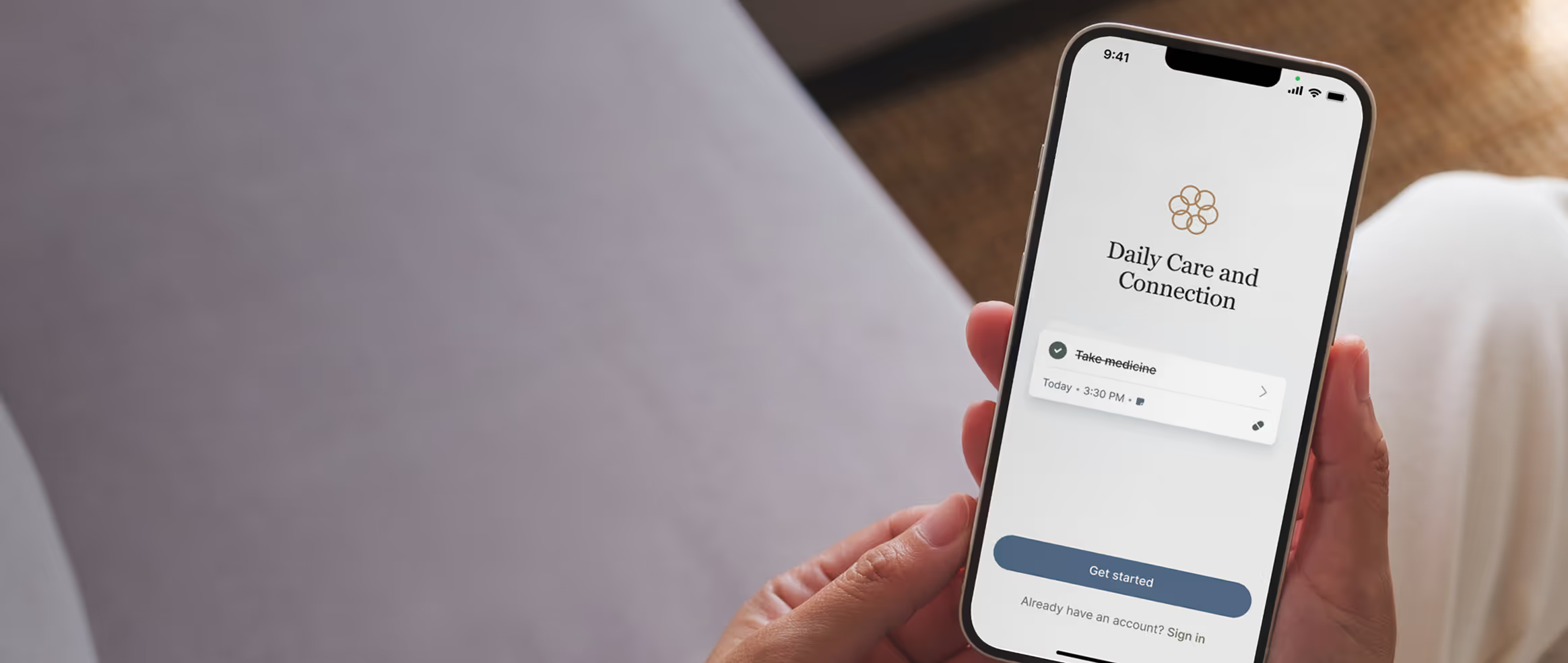
Caily is a family communication platform built specifically for senior living communities. By integrating with existing EHR systems, Caily automatically compiles daily care summaries — covering ADLs, meals, activities, and care notes — and delivers them directly to families through a simple, accessible app that works for everyone from tech-savvy adult children to grandparents managing their own devices. There's no manual data entry. No extra burden on already-stretched staff. No more families calling to ask questions that should already be answered.
Replacing Informal Communication With Compliant Channels
Caily also replaces the informal, non-compliant tools that many communities rely on today — personal phones, group texts, and messaging apps that offer no audit trail and no HIPAA compliance. Every message, update, and care note lives in one secure, documented place. That means better protection for families, better protection for staff, and better protection for the community if questions ever arise about what was communicated and when. HIPAA-compliant family messaging through Caily ensures that doing the right thing for families is also the right thing for compliance.
Built for Every Person in the Ecosystem
For families, Caily means genuine, daily connection to their loved one's life — not just crisis communication when something goes wrong. For staff, it means fewer interruptions and a communication workflow that fits naturally into the care day. For leadership, it means documented records, reduced litigation risk, and the kind of family satisfaction data that supports census growth and community reputation. Consistent family communication in senior living communities isn't a luxury feature. Caily makes it the default.
Consistent Communication Is the Foundation of Family Trust in Senior Care
Families don't expect perfection from senior living communities. They expect honesty, care, and to be kept in the loop. When family communication in senior living is consistent — when families can count on hearing from you — that expectation is met before they even have to ask. That predictability is the foundation of trust, and trust is the foundation of everything else.
The communities that get this right don't just reduce complaints. They build the kind of lasting relationships that turn families into advocates, reduce turnover anxiety among residents, and create the safe, connected environment every resident deserves. Senior living family engagement done well doesn't just feel better — it performs better in every metric that matters.
Frequently Asked Questions About How Inconsistent Family Updates Erode Trust in Senior Living Communities
Why do families lose trust in senior living communities when communication is inconsistent?
When senior living family updates are inconsistent or absent, silence fills with anxiety rather than reassurance — and families begin to assume something is wrong rather than that everything is fine. That erosion of confidence is hard to reverse and often leads to increased call volume, formal grievances, and in some cases, legal action.
How does inconsistent family communication increase legal risk for senior living communities?
If a family member later claims they were never informed about a change in their loved one's condition, a community that relied on verbal updates or personal phone texts has no record to demonstrate otherwise. HIPAA-compliant family messaging that creates a documented, timestamped record of every update is one of the most practical risk management tools a senior living community has.
How does consistent family communication reduce inbound calls to senior living staff?
When families receive proactive, daily senior living family updates, their questions are answered before they have time to pick up the phone. Communities that close the information gap consistently see significant reductions in call volume, freeing staff to stay focused on care.

Get Started Now
Enjoy full access to everything Caily offers, from medication tracking to shared schedules and daily check-ins. See how much easier caregiving can be when everything is coordinated in one place.
Start your free trial