
Health Care Tech Acronyms: The Complete Senior Care Guide

Walk into an assisted living facility on your first day as a new hire, a family member, or an administrator onboarding to a new software platform — and you'll quickly notice something: everyone around you seems to be speaking in code. Nurses reference ADLs and IADLs. The operations team is talking about EMAR and PCC. The compliance officer mentions HIPAA and PHI in the same breath. And somewhere in the vendor contract on your desk is a line about BAAs and SOC 2 certification.
Healthcare tech acronyms are everywhere in senior care, and they're not going away anytime soon. The industry runs on shorthand because speed and precision matter — in documentation, in compliance, in care delivery, and in the technology platforms that tie it all together. The problem isn't that these terms are complicated. It's that no one ever hands you the decoder ring.
This guide exists to change that. Whether you're a family caregiver trying to understand your loved one's care plan, a frontline CNA getting comfortable with a new EMAR system, or an operator evaluating senior care tech platforms, these are the healthcare abbreviations and acronyms you'll encounter most, explained plainly, in context, and in a way that actually sticks.
The Care Setting: Where These Terms Live
Before diving into the acronyms themselves, it helps to understand the landscape they describe. Senior care isn't one thing — it's a spectrum of settings, each with its own terminology, staffing models, and documentation requirements. The healthcare abbreviations used in an ALF look a little different from those in an SNF, and both differ from what you'd see in a PACE program.
An ALF (Assisted Living Facility) is a residential community that helps residents with daily tasks while supporting as much independence as possible. A SNF (Skilled Nursing Facility) provides a higher level of clinical care, with 24/7 nursing staff and services like physical therapy and wound care. A CCRC (Continuing Care Retirement Community) offers all of these levels under one roof — residents can move from independent living to assisted living to memory care without changing communities. And LTC (Long-Term Care) is the umbrella term for any ongoing care provided to individuals who need daily assistance, whether in a facility or at home.
One program worth knowing specifically is PACE — Program of All-Inclusive Care for the Elderly. PACE is a federally funded program that provides comprehensive medical, social, and support services to seniors, with the explicit goal of keeping them living in the community rather than moving into a facility. It's a model built around coordination, and it relies heavily on the kind of integrated care tech that's becoming standard across the industry.
Resident Care Acronyms: The Language of Daily Life
The most fundamental healthcare tech acronyms in assisted living are the ones that describe what residents can and can't do on their own. These terms form the foundation of every care plan, intake assessment, and progress note that gets entered into an EHR.
ADL — Activities of Daily Living — refers to the six core self-care tasks: bathing, dressing, eating, toileting, transferring (e.g., from bed to chair), and mobility. When a care team says a resident needs "assistance with two ADLs," they mean that person requires hands-on help with two of those six tasks. ADL assessments directly determine staffing ratios, care hours, and in many cases, reimbursement rates.
IADL — Instrumental Activities of Daily Living — goes a level deeper. These are higher-functioning tasks, such as managing finances, cooking, shopping, using the phone, and handling medications. IADLs matter because they often signal early cognitive decline before ADL performance drops. A resident who can still bathe and dress independently but can no longer manage their medications or pay their bills may have IADLs that are slipping — and that shows up in the documentation.
UTI — Urinary Tract Infection — might seem like a clinical term rather than a tech acronym, but it appears constantly in senior care documentation because according to the National Library of Medicine, UTIs are one of the most common and most dangerous infections in older adults. They're frequently linked to sudden behavioral changes, confusion, and falls, which means tracking UTI history in an EMAR or EHR is a genuine safety issue, not just a charting formality.
Staff Roles: Knowing Who's Who in the Chart
Care documentation is only meaningful when you know who created it. Senior care facilities have layered clinical teams, and each role comes with its own abbreviation that appears regularly in care plans, shift notes, and incident reports.
An RN (Registered Nurse) holds the highest clinical authority on most care floors and is responsible for assessments, care planning, and overseeing medication administration. The DON — Director of Nursing — is the RN who runs the entire nursing department at a facility, setting clinical standards and managing the team. Working alongside them is the LPN (Licensed Practical Nurse), who assists with care delivery, medication administration, and monitoring. CNAs — Certified Nursing Assistants — are the frontline caregivers who interact most frequently with residents, assisting with ADLs, charting observations, and flagging concerns to the nursing team.
PT (Physical Therapy or Physical Therapist) and OT (Occupational Therapy) are rehabilitation services that appear in care plans after hospitalizations, falls, or surgery. PT focuses on mobility and strength; OT focuses on restoring the ability to perform daily tasks independently. Both generate documentation that flows into the resident's EHR and informs ongoing care planning.
The QAP — Quality Assurance Person — is a role specific to many assisted living and skilled nursing settings. This is the staff member responsible for auditing care standards, reviewing documentation for accuracy and compliance, and ensuring the facility meets regulatory requirements. In tech terms, the QAP is often the person who reviews EMAR reports, flags missed medications, and works closely with the facility's EHR or care management platform system administrators.
Health Records and Documentation Tech: The Digital Backbone of Senior Care
This is where healthcare tech acronyms get dense fast — and where understanding the differences between terms really matters for anyone working with or evaluating senior care technology.
An EHR (Electronic Health Record) is the comprehensive, shareable digital record of a resident's health history across all providers and care settings. An EMR (Electronic Medical Record) is similar, but typically refers to a record that lives within a single practice or facility and isn't designed to travel with the resident. The practical difference: when a resident transfers from your facility to a hospital and their records follow them, that's EHR functionality. When records stay siloed in one system, that's more EMR behavior. Most modern senior care platforms aim to operate as true EHRs.
The EMAR — Electronic Medication Administration Record — is one of the most operationally critical tools in any care setting. It's the digital log that tracks every medication given to every resident: what was administered, when, by whom, and whether any doses were missed. An EMAR replaces handwritten medication logs, reduces errors, and creates a clear audit trail for both clinical and compliance purposes. For frontline caregivers, the EMAR is often the system they interact with most on every shift.
PCC — PointClickCare — is the dominant EHR platform in the skilled nursing and senior living space. If you're working in or partnering with a care facility, there's a good chance PCC is the system of record. Understanding how other tools — including newer senior care tech platforms — integrate with or complement PCC is an important part of evaluating any technology investment.
API (Application Programming Interface) and FHIR (Fast Healthcare Interoperability Resources) are the technical standards that allow different healthcare systems to talk to each other. In plain terms: an API is the bridge, and FHIR is the language they speak across it. When a senior care tech platform claims it can integrate with your existing EHR, what they're really saying is that they can communicate via API using a standard like FHIR. This matters enormously when choosing any new software, because systems that can't communicate create documentation gaps and increase manual work for staff.
Compliance and Data Privacy: The Rules Behind the Records
Senior care is one of the most heavily regulated industries in the country, and a significant chunk of the healthcare abbreviations caregivers encounter exist because of that regulatory environment. Knowing these terms isn't just trivia — it's how you protect your residents and your facility.
HIPAA — Health Insurance Portability and Accountability Act — is the federal law that governs the privacy and security of health information. Every person who touches resident data, and every platform that stores or transmits it, must comply with HIPAA. PHI (Protected Health Information) is the specific category of data HIPAA protects: anything that could identify a resident and is tied to their health — names, dates of birth, diagnoses, treatment records, and more.
HITECH — Health Information Technology for Economic and Clinical Health Act — extended and strengthened HIPAA when it passed in 2009, specifically in response to the growth of electronic health records. HITECH increased penalties for breaches and made it clear that digital data carries the same (and in many cases higher) compliance obligations as paper records.
When a care facility contracts with a software vendor, they're required to have a BAA — Business Associate Agreement — in place. This is a legally binding contract that obligates the vendor to handle PHI in compliance with HIPAA. If a vendor can't or won't sign a BAA, that's a serious red flag. SOC 2 (Service Organization Control 2) is a related security certification that independently verifies a vendor's data protection practices. It's not legally required, but it's a meaningful signal that a tech platform takes security seriously.
CMS — Centers for Medicare & Medicaid Services — is the federal agency that regulates care facilities and administers programs such as Medicaid and PACE. CMS sets the rules that govern everything from staffing ratios to reimbursement rates to mandatory reporting systems like the PBJ (Payroll-Based Journal), which requires facilities to submit direct care staffing data electronically every quarter. Understanding CMS is understanding who writes the rules your facility has to follow.
SSO (Single Sign-On) and 2FA (Two-Factor Authentication) are the security mechanisms that control how staff access digital systems. SSO allows caregivers to log in to multiple platforms with a single set of credentials, reducing friction at the start of every shift. 2FA adds a second layer of verification — a code sent to a phone, for example — before granting access. Both are increasingly standard in compliant senior care tech platforms.
The Technology Powering Modern Senior Care
The final category of healthcare tech acronyms is the one that's changing fastest. Senior care technology has evolved from basic scheduling software to a sophisticated ecosystem of connected tools, and the terminology has expanded with it.
SaaS — Software as a Service — is the delivery model behind nearly every modern senior care platform. Instead of installing software on local servers, facilities subscribe to cloud-based tools that are accessible from any device with an internet connection. This model makes updates, security patches, and support much more manageable for care teams who don't have large IT departments.
IoT — Internet of Things — refers to the network of connected devices increasingly found in care settings: bed sensors that detect movement and sleep patterns, wearables that track heart rate and oxygen levels, door monitors that alert staff to elopement risks. When these devices feed data into a care platform in real time, they give care teams a level of visibility into resident wellbeing that wasn't possible even a decade ago.
RPM — Remote Patient Monitoring — takes that a step further, using connected devices to track resident health data and transmit it directly to clinical staff. RPM is particularly valuable for managing chronic conditions and catching early warning signs before they become emergencies. AI (Artificial Intelligence) is increasingly embedded in these systems — analyzing patterns in RPM data, flagging anomalies, and even generating predictive alerts that allow caregivers to intervene before a resident falls or a health condition deteriorates.
MDS — Minimum Data Set — is a standardized clinical assessment tool used in skilled nursing facilities to evaluate residents across dozens of health and functional dimensions. MDS data drives care planning and directly determines CMS reimbursement rates, which makes accurate and timely MDS documentation one of the highest-stakes documentation responsibilities in senior care. Many EHR platforms, including PCC, are built with MDS workflows as a core function.
RFID — Radio Frequency Identification — uses small tags and readers to track people and assets throughout a facility. In senior care, RFID is most commonly used for elopement prevention, ensuring that residents with cognitive impairment can't exit the building undetected. It's also used to track medical equipment, medication carts, and other high-value assets.
Finally, ROI — Return on Investment — matters in senior care tech for a reason beyond the obvious financial one. When operators evaluate whether a platform like an EHR, scheduling tool, or care coordination app is worth the investment, ROI becomes the language of that conversation. But ROI in senior care isn't just about dollars saved — it also includes reduced documentation errors, better survey outcomes, lower staff turnover, and improved resident health metrics. The best senior care technology delivers ROI across all those dimensions.
The Acronyms Are the Map, Not the Territory
Knowing your healthcare tech acronyms doesn't make you a caregiver, a compliance expert, or a technologist. But it does make you a more informed participant in a system that affects millions of people's daily lives. Whether you're navigating a care plan for a parent, onboarding to a new EMAR system, or evaluating senior care tech platforms for your facility, fluency in this language helps you ask better questions, catch more errors, and advocate more effectively for the people in your care.
The senior care industry is in the middle of a genuine technological transformation and the tools, platforms, and standards driving that transformation all come with their own vocabulary. The more comfortable you are with that vocabulary, the better equipped you'll be to participate in it.
Frequently Asked Questions About the Guide to Health Care Tech Acronyms
What is the difference between an EHR and an EMR?
An EMR is a digital record that lives within a single facility and isn't designed to be shared outside of it, while an EHR follows a resident across care settings — from hospital to skilled nursing facility to home health. In modern senior care, EHR functionality is the standard because continuity of information across providers directly improves care quality and reduces dangerous gaps.
What does HIPAA require of assisted living facilities?
HIPAA requires that any facility handling Protected Health Information implement safeguards to keep that data private and secure, and that any software vendor handling PHI has a signed Business Associate Agreement in place. Violations carry significant fines, and the HITECH Act strengthened enforcement specifically around electronic health records.
What are ADLs in caregiving?
ADLs — Activities of Daily Living — are the six core self-care tasks used to measure a resident's functional independence: bathing, dressing, eating, toileting, transferring, and mobility. They're one of the most consistently documented data points in senior care because they directly inform care plans, staffing levels, and in skilled nursing facilities, CMS reimbursement rates.

Get Started Now
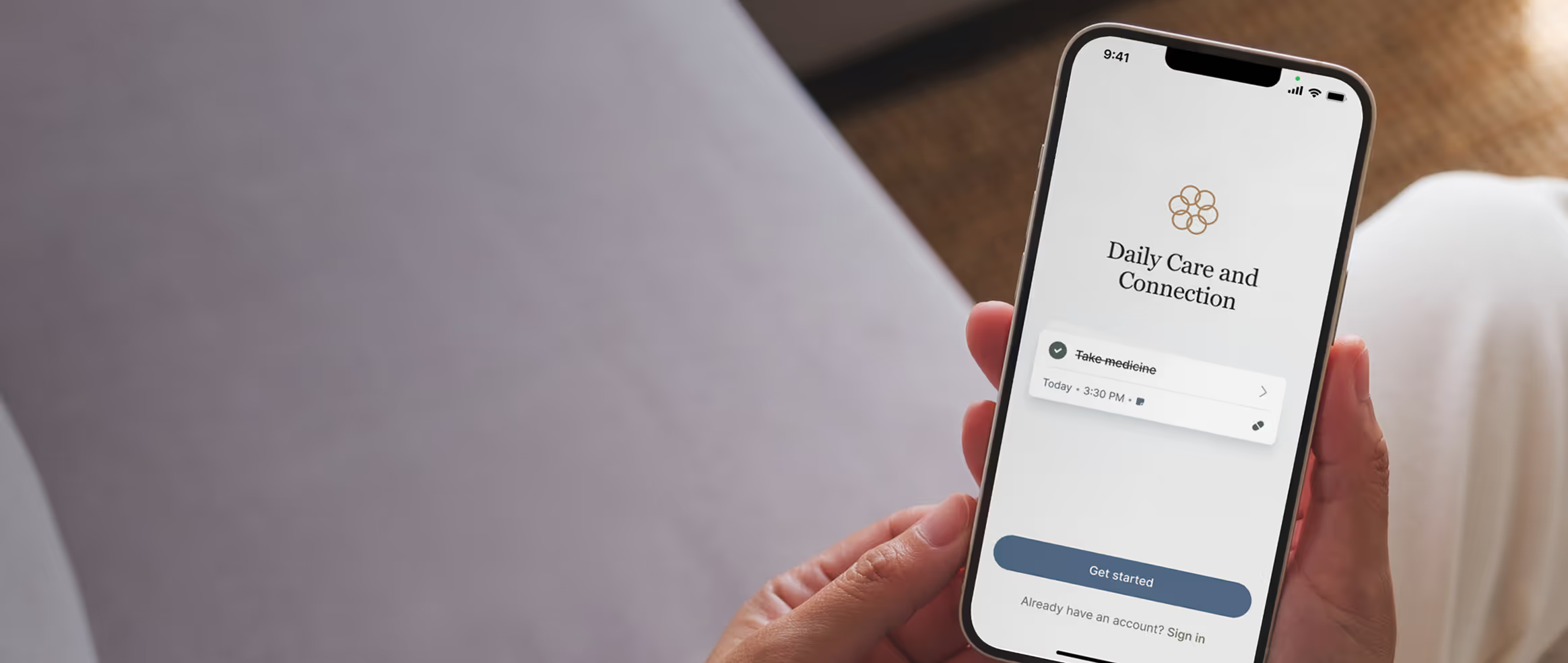
Enjoy full access to everything Caily offers, from medication tracking to shared schedules and daily check-ins. See how much easier caregiving can be when everything is coordinated in one place.
Start your free trial